Learning & relearning
In 1978 I came back to England, having worked in Greece for three years, teaching, translating and writing for some of the independent music magazines emerging after the long years of the military Junta, toppled in 1974. I was keen to be a journalist and focused on finding freelance work around the arts and music.
I was fortunate to be asked to do some editing work for the ILEA Learning Materials Service, the publishing company for the Inner London Education Authority. The most significant and enduring book was Marches: unemployment and racism, published in 1981. The main writer was history teacher Lorna Cocking: I supported her with groundwork, writing and with picture research.
Marches, looking at both the 1930s and the post-war years in Britain, was intended to help teachers discuss with young people the historical and social context in which racist attitudes are bred. The book began with unemployment and the Jarrow March and moved to the rise of fascism first in Europe and then in Britain with Oswald Mosely and his attempt to change the harsh economic conditions. His fascist, anti Jewish activities were powerfully rejected by the people of East London with the battle of Cable street.
The second half of the book covers post-war Britain: changing attitudes to newcomers, the rise of the National Front, media coverage, overview of the racial discrimination in housing and work, new legislation and its impact.
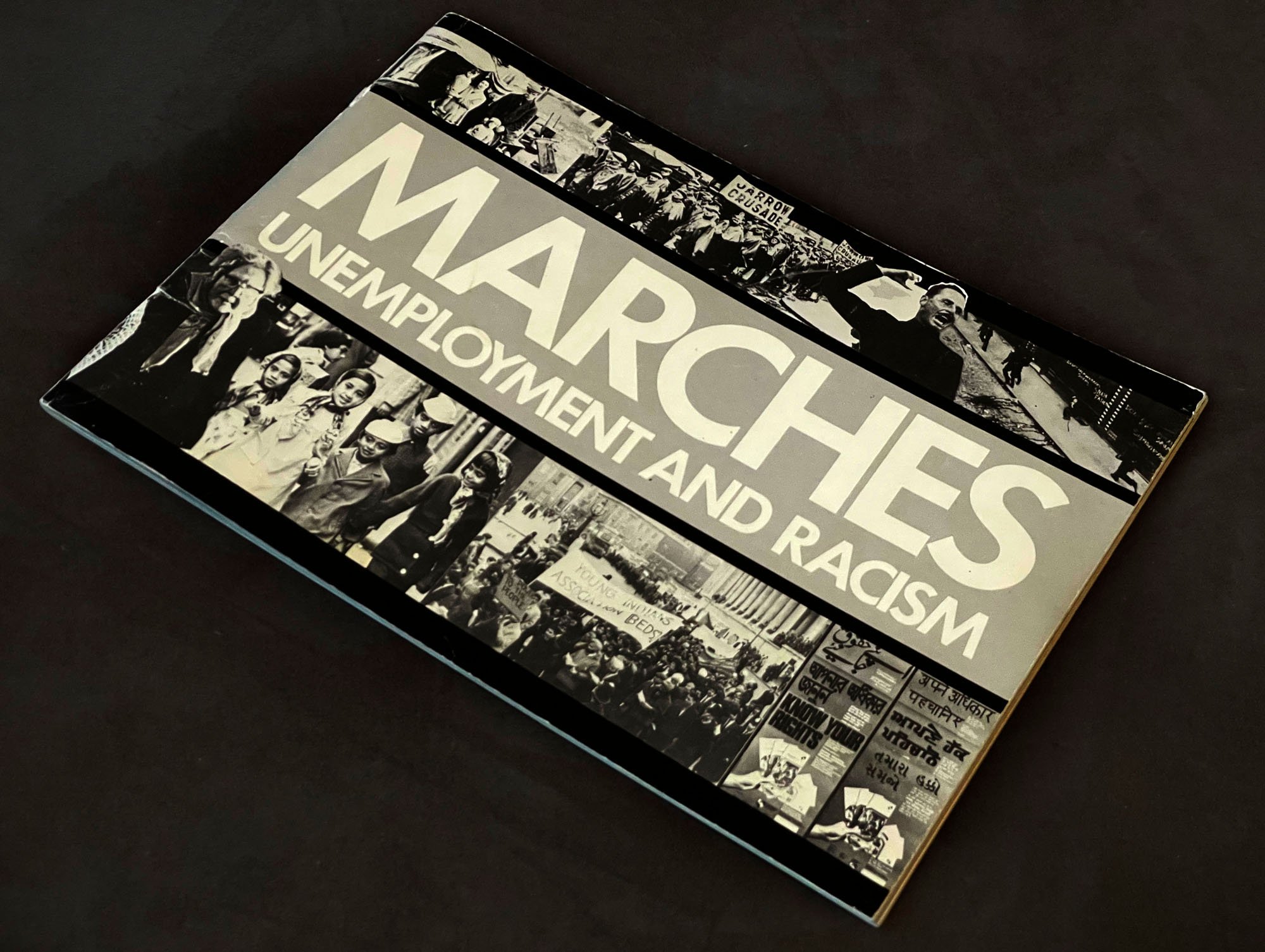
Having participated in the production of this book, I not only learned about the past and its consequences but also about contemporary struggles by immigrant workers encouraged to come and settle in Britain. It gave me a much clearer picture of our colonial activities and the strongly emerging racism that was affecting people coming from ex-colonies to the Home country. I thought of myself as anti-racist, even ‘cool’ and aware as I was hanging out with black musicians and writing about them and their work.
However - and this is a key reconsideration of my own mindset - although I now knew more in terms of information and facts, I never delved into my own unconscious racism that had been ingrained in me through a middle class white upbringing plus an institutionalised education in a boarding school where a consistency of attitude was entrenched.
It was not until very late in my life that a visit to Alabama shocked me into a full journey into both a very personal examination of my whiteness and my privilege as well as a far greater interrogation of British colonialism and its embracing of the race construct and hierarchy.
When I turn the pages of Marches now I consider it to have been an important book for its time - with anti-racist protests needing contextualisation - and also the concept of comparing protests over time. I am proud to have been a part, to have discovered the various reportage photography agencies as well as the Museum of Labour History archives, all of which expanded my view of the world. But being involved didn’t impact me as it needed to - if change is going to be made.
Lorna Cocking continued her important educational work and in 2024 she was awarded an MBE for her services to education.